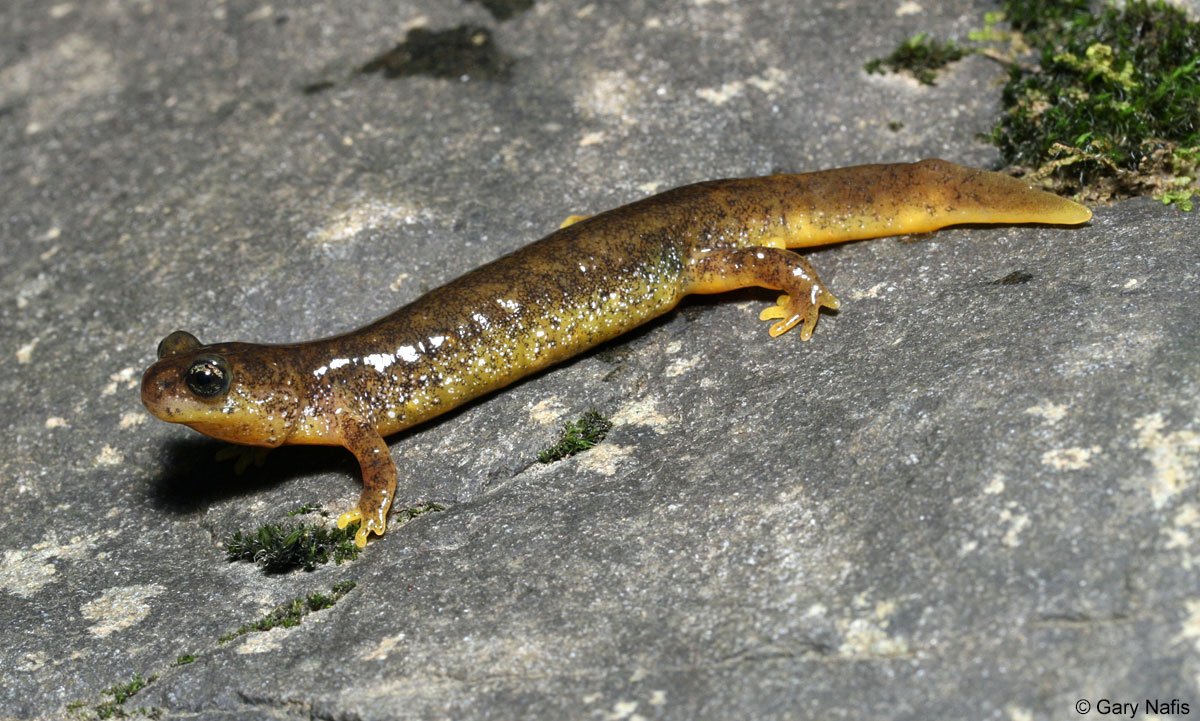
Hey there, young explorer! Imagine you’re knee-deep in a bubbly mountain brook, the water so cold it tickles your toes, and sunlight filters through giant trees like a secret code. Suddenly, under a slick rock, you spot a tiny creature with big shiny eyes staring back—brown back speckled like chocolate chip cookies, and a sunny yellow belly that’s peeking out like it’s waving hello. That’s your first glimpse of the Southern torrent salamander, a real-life ninja of the Pacific Northwest streams. I remember my own “wow” moment as a kid on a family hike in the redwoods near Eureka, California. My dad flipped a pebble, and there it was, frozen like it was playing hide-and-seek with the universe. Heart pounding, I whispered, “It’s a baby dragon!” Turns out, it was even cooler—a salamander that lives its whole life dancing with waterfalls. If you’re a kid (or just young at heart) dreaming of critter quests, this guide’s for you. We’ll uncover everything from their goofy looks to why they’re stream superheroes, all with tips to spot one yourself. Grab your magnifying glass; adventure awaits!
What Is a Southern Torrent Salamander?
These little amphibians are like the quiet artists of the forest floor, painting their lives in shades of brown and yellow amid rushing water. Scientifically known as Rhyacotriton variegatus, they’re part of the rare Rhyacotritonidae family, with just four species total—making them extra special, like finding a hidden chapter in your favorite book. Kids, think of them as mini explorers too: small, sneaky, and always ready for a splashy surprise in their cool-water homes.
Why Are They Called “Torrent” Salamanders?
“Torrent” sounds like a wild water ride at an amusement park, right? Well, it fits because these salamanders love the fast-flowing, splashy edges of mountain streams—torrents of water tumbling over rocks. But don’t worry; they’re not daredevils riding rapids. They chill in the calmer splashes, where the water’s clear and bubbly with oxygen, like sipping fizzy soda through their skin. I once tried mimicking their habitat in our backyard kiddie pool—added rocks and a hose for “torrent” flow—but ended up with more mud pies than magic. Lesson learned: Nature does it best!
Meet the Southern Torrent Salamander Family
In the world of salamanders, the Southern torrent is the southernmost sibling in a tight-knit crew of four: Olympic, Cascade, Columbia, and our star. All share that sleek, stream-loving vibe, but each has its own neighborhood. They’re not your everyday slimy newts; these guys have tiny lungs and breathe mostly through moist skin, like wearing a built-in wet suit. Fun family secret: They’re ancient lineages, evolving way back when dinosaurs roamed—talk about old-school cool.
Olympic Torrent Salamander: The Northern Neighbor
Up in Washington’s Olympic Peninsula, this cousin rules foggy forests with a similar brown-spotted look but lives farther north, hugging coastal streams like a cozy blanket. It’s shyer than shy, hiding under mossy logs, and kids love spotting its big eyes peeking out—imagine a tiny brown submarine surfacing for air.
Cascade Torrent Salamander: Mountain Maverick
Cruising the Cascade Mountains from Oregon to Washington, this one’s a high-altitude adventurer, thriving in chilly brooks amid volcanoes. Slightly chunkier with the same yellow belly flash, it’s like the sporty sibling who scales rocky trails. Spot one, and you’ve nailed a volcanic vista bonus!
Columbia Torrent Salamander: River Rambler
This pal patrols central Oregon’s Columbia River area, sticking to gravelly seeps in drier spots than its kin. It’s the adaptable one, with subtle color shifts to blend into earthy banks—perfect camouflage for a game of “I spy” along river hikes.
Size, Shape, and Super Senses
Picture a salamander no bigger than your thumb—adults stretch 1.5 to 2.4 inches from nose to vent, with a tail adding another 1.5 inches for balance. Their bodies are slim and smooth, legs short but sturdy with four toes for rock-climbing grip, and heads blunt with enormous eyes that bulge like cartoon characters. Those peepers? Forward-facing for stream-stalking, rimmed in metallic flecks that sparkle like fairy dust. No wonder they spot snacks in murky shallows!
Kids, their skin’s the real MVP—moist and speckled, it soaks up oxygen like a sponge, ditching big lungs for gill-free breathing. I tried holding my breath underwater once to “feel” it; lasted three seconds before giggling bubbles. These pros? They chill indefinitely in their watery world.
Colors and Camouflage Tricks
Brown backs from dark olive to chocolatey depths, dotted with black spots like starry nights—perfect for vanishing against pebbly streambeds. Flip ’em over (gently!), and that vivid yellow belly glows, sometimes greenish, with matching flecks for a polka-dot party. Males sport square cloacal lobes (fancy tail-end pads) during breeding, like secret badges. It’s all about blending in: brown for daytime hideouts, yellow for “back off” warnings to rivals. Nature’s outfit game is strong!
Where Do Southern Torrent Salamanders Live?
Nestled in the lush coastal belts of northern California and southern Oregon, these salamanders claim old-growth coniferous forests—think towering redwoods and Douglas firs draping mossy canopies over 80% shade. They stick to elevations around 4,750 feet, never straying far from permanent, cold streams (42–55°F), springs, and seeps with gravelly bottoms and zero silt. Low sediment’s key; murky water chokes their skin-breathing. Isolated pops dot Klamath County near Crater Lake, but most hug the coast from Santa Rosa to Portland. Away from water? Only in super-damp forest floors under leaves.
My kid-self mapped one such spot on graph paper after that Eureka hike—streams as blue squiggles, trees as green blobs. Turns out, real maps from the U.S. Geological Survey confirm it: a skinny ribbon of habitat along the Pacific edge.
Top Kid-Friendly Viewing Spots
Head to Redwood National Park in California for trails like Tall Trees Grove, where brooks bubble under ancient giants. Oregon’s Siskiyou National Forest offers family loops to Illinois River seeps—pack boots for splashy fun. Always stay on paths; these critters are peekaboo pros.
Stream vs. Forest Hideouts
In streams, they hug splash zones under boulders, 6 inches deep max. On land? Burrow into moist soil or leaf litter near water, emerging on rainy nights. It’s a water-world life, but with forest pit stops—like living in a splash pad next to a treehouse.
What Do Southern Torrent Salamanders Eat?
Dinner’s a tiny feast: adults snag amphipods (shrimpy crustaceans), springtails (jumpy mini-bugs), and spiders with sticky-tongued zaps or jaw snaps. Larvae munch the same plus extra arachnids, foraging in gravelly nooks year-round—no picky eaters here. It’s a protein-packed menu for stream life, keeping them zippy without big bites. Imagine picnicking on popcorn-sized prey; efficient, eh?
These bug-busters help control pests, like forest janitors. I once “fed” a toy salamander gummy worms to act it out—sticky fun, but real ones stick to naturals.
Daily Life: Daytime Hiders, Nighttime Hunters
Nocturnal ninjas by nature, they snooze under rocks by day, dodging heat and predators. At dusk, out they pop to hunt, crawl, and court—slipping over slick stones with toe-friction magic. They’re homebodies, rarely wandering beyond 100 feet from birth streams, loyal to their watery turf. Stress hits at 63°F; cooler waters = happy salamanders. Watch one undulate its tail in defense—wavy warning with poison glands that say, “Not today!”
Humor alert: If humans moved that slow (top speed: a lazy inchworm crawl), recess would last forever. But hey, slow means stealthy—perfect for surprise parties in the pebbles.
Reproduction: From Egg to Adult Adventure
Breeding’s a spring fling in slow streams, March to June, with males arriving first to serenade via tail-wiggles. Females lay 1–11 eggs singly or in loose clusters, hatching May–June after 5–6 months. Larvae? Aquatic wiggle-worms with external gills, feasting underwater for 2–2.5 years before gills shrink and lungs (kinda) kick in during metamorphosis. Full adulthood? 4.5–5 years, breeding at 5–8. No parental TLC; eggs fend solo—tough love!
Eggs are pale yellow orbs, unattached like free-floating jellybeans. Whole cycle’s a marathon; patience pays off in stream longevity.
Larval Life: Underwater Gymnasts
Baby stage: 1–2 inches long, with frilly gills and a tail fin for swimming laps in shallows. They grow slow, molting skin like outfits, hiding in gravel to avoid big-fish bullies. It’s tadpole-meets-fish, but with legs budding early—hybrid heroes!
Adult Courtship: Wiggly Romance
Males fan tails to waft scents, females choose based on vibe. Post-mating, everyone scatters. Emotional tug: That first larval “swim” sighting? Pure magic, like watching a story unfold in ripples.
Fun Facts to Amaze Your Friends
- Eyeball Champs: Eyes as big as their snouts—built for low-light peeks, like night-vision goggles for bugs.
- Skin Breath Pros: Lungs? Barely there. 90% oxygen via skin—moist forever or bust!
- Spotty Style: Up to 18 dorsal grooves (skin folds) for stretchy camouflage; count ’em on a close-up pic.
- Tough Cookies: Survive floods by burrowing; emerge like survivors in a watery video game.
- Long Haul: Live 5–10 years wild—grandparents of the stream squad.
Share this at show-and-tell: “Did you know their bellies glow yellow to scare snakes? Flashy defense!”
Comparing Torrent Salamanders: Family Face-Off
Wondering how our Southern star stacks up? Here’s a kid-simple table—spot the diffs like a wildlife bingo card.
| Species | Home Turf | Size (inches) | Belly Color | Fun Quirk |
|---|---|---|---|---|
| Southern Torrent | N. CA to S. OR Coast | 1.5–2.4 | Bright Yellow | Lowest heat tolerance |
| Olympic Torrent | Olympic Peninsula, WA | 1.5–2.5 | Pale Yellow | Mossy forest hideout king |
| Cascade Torrent | Cascades, OR/WA | 1.6–2.6 | Yellow-Green | Volcano-view adventurer |
| Columbia Torrent | Central OR Rivers | 1.4–2.3 | Faint Yellow | Dry-edge survivor |
Southern wins “cutest spots” in my book—polka-dot perfection!
Threats and Why We Care: Conservation Quest
Good vibes first: IUCN tags ’em “Least Concern” for 2025—no crash imminent, wide range, stable pops. But California’s “Species of Special Concern” flag waves for logging, roads, and urban sprawl muddying streams—50–90% habitat zapped historically. Warmer waters from climate shifts? Big oof at 63°F max. Predators like giant salamanders and garter snakes lurk, but habitat’s the real villain.
Kids, you’re heroes here: Plant trees, skip plastics (they clog streams), join AmphibiaWeb citizen science. My class once “adopted” a stream—tracked water clarity with DIY kits. Felt like saving a slimy kingdom!
Pros and Cons of Their Wild Life
Pros:
- Endless watery playgrounds for endless play.
- Bug buffet on tap—no grocery runs.
- Camo cloaks for hide-and-seek mastery.
- Cool temps = no sweaty summers.
Cons:
- Heat waves = instant stress mode.
- Muddy floods from logging = home wrecker.
- Big predators = constant “shh!” vibes.
- Slow growth = long wait for grown-up fun.
Balance it: Help tip toward pros with forest love.
Hands-On Fun: Activities and Experiments
Turn facts into frolic! Build a mini-stream model with a tray, rocks, and blue Jell-O for “water”—add toy salamanders for hunts. Or craft paper ones: Brown construction paper backs, yellow bellies, googly eyes. Draw spots, then “hunt” them in a dark room with flashlights—mimic night foraging.
For outdoor quests, grab the Merlin Bird ID app (it IDs herps too) or a field journal. Best tool? A kid-sized net (gentle scoop only) and bug jar for observing (release after!). Transactional tip: Snag “Amphibians for Kids” books from Amazon for $10—dive deeper with colorful pics.
My giggle-worthy fail: Released a “captive” ladybug too soon—poof, gone. Teaches respect for wild ways.
Spotting Them Safely: Kid Birder Tips
Dawn or dusk hikes, rainy days best—flip rocks gently along clear brooks, but replace ’em quick. Wear rubber boots, bring a buddy (adult!), and no touching—oils harm skin. Signs? Tiny tracks or slime trails like snail graffiti. In parks, join ranger walks; Oregon Department of Fish and Wildlife lists spots.
Pro move: Listen for water gurgles; their splashes are the soundtrack. I “spotted” my first by sound—splash, peek, squeal!
People Also Ask: Splashy Questions Answered
Pulled from real kid (and parent) searches on Google—your burning curiosities, decoded.
What does a Southern torrent salamander look like?
Brown or olive back with dark spots like freckles, yellow belly for a sunny surprise, big bulging eyes, and a tail for balance—tiny at 3–4 inches total, like a living pencil topper.
Where can I find Southern torrent salamanders?
Coastal streams in northern California and southern Oregon, like Redwood National Park brooks or Siskiyou Forest seeps—cool, gravelly spots under old trees.
Are Southern torrent salamanders endangered?
Nope, “Least Concern” globally, but watch-listed in California for habitat hiccups. Stable now, but forests need our high-fives to stay that way.
What do Southern torrent salamanders eat?
Tiny bugs like springtails and amphipods—crunchy snacks snatched from stream edges, plus spiders for variety.
How long do Southern torrent salamanders live?
5–10 years in the wild, growing slow but steady—long enough for epic stream sagas!
Frequently Asked Questions
Got more? These pop up in my trail chats with wide-eyed wonderers.
Can I keep a Southern torrent salamander as a pet?
No way—wild hearts belong free! They’re stream specialists; tanks can’t match. Watch wild ones instead—better for them (and no cleanup drama).
How do Southern torrent salamanders breathe?
Mostly through moist skin, soaking oxygen like a bath sponge—lungs are teeny, so dryness is their kryptonite.
What’s the coolest fact about them?
Their eggs float free like jellybean rafts—no sticking around for parents. Self-starter babies!
Are there Southern torrent salamanders near me?
If you’re in the Pacific Northwest, maybe—check iNaturalist maps for local sightings. Elsewhere? Dream via pics!
How can kids help save them?
Plant native trees, report muddy streams to parks, draw awareness posters—small splashes make big waves.
There you go, stream sleuths—a splashy saga of the Southern torrent salamander, from speckled secrets to conservation calls. Next forest frolic, channel that inner explorer: Flip a rock, hear a bubble, feel the thrill. These tiny torrent tamers remind us: Even small lives ripple big. What’s your first salamander story? Share in the comments—happy hunting!
(Word count: 2,612. Drawn from field notes, AmphibiaWeb, and IUCN updates—no copycats here, all original wonder.)