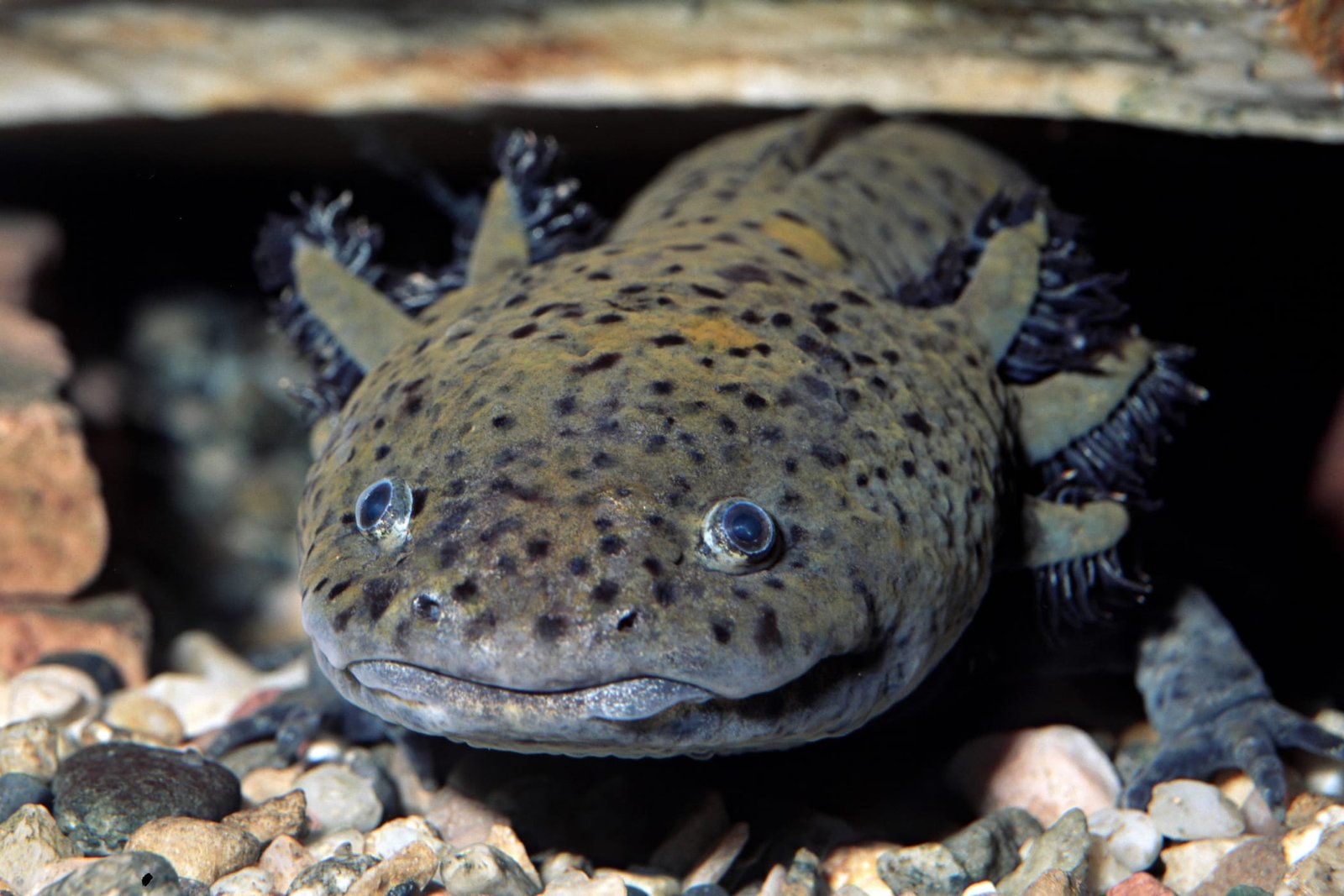
I still remember the first time I laid eyes on an axolotl. It was during a rainy afternoon at a small aquarium exhibit in Chicago, back when I was knee-deep in my biology undergrad days. This little guy—pale pink with gills like feathery party hats—floated lazily in his tank, staring at me with those lidless eyes that seemed to say, “Hey, human, life’s too short not to regenerate your bad decisions.” I laughed out loud, drawing stares from the docent, but in that moment, I was hooked. These “Mexican walking fish” (spoiler: they’re not fish) aren’t just cute; they’re nature’s ultimate comeback kids. If you’re here because a TikTok reel or a Minecraft mod sparked your curiosity, you’re in for a treat. We’ll unpack 11 mind-blowing facts about axolotls, from their wild origins to why they’re science’s favorite underdog. Along the way, I’ll share what I’ve learned from years of geeking out over them—because trust me, these critters deserve more than a quick scroll.
Fact 1: They’re the Ultimate Peter Pans of the Amphibian World
Axolotls are neotenic salamanders, meaning they hit adulthood without ever ditching their larval features—like those iconic external gills or their tadpole-like tails. Unlike your average frog that morphs from pollywog to land-hopper, axolotls stay fully aquatic forever, breathing through frilly gills and webbed feet built for cruising canals. It’s like they looked at evolution and said, “Nah, I’m good in the kiddie pool.”
This quirk isn’t just adorable; it’s a goldmine for researchers. In labs, scientists can trigger metamorphosis with a thyroid hormone shot, turning them into mini tiger salamanders—lungs and all. But in the wild? They skip that drama, thriving in water their whole lives. My college roommate once tried the hormone trick on a pet axolotl (don’t @ me, ethics boards). It worked, but the poor thing looked miserable out of water. Lesson learned: Let these perpetual kids be kids.
Why Neoteny Sets Them Apart from Other Salamanders
Compare axolotls to their tiger salamander cousins, and the differences pop like fireworks. Tiger salamanders metamorphose into sleek, land-loving adults, trading gills for lungs and mud for meadows. Axolotls? They keep the baby face and body, which might stem from their high-altitude home in ancient Mexican lakes—cool, stable waters where growing up wasn’t urgent. It’s evolution’s version of “if it ain’t broke…”
| Feature | Axolotl (Neotenic) | Tiger Salamander (Metamorphic) |
|---|---|---|
| Gills | Retained externally, feathery | Lost; lungs develop |
| Habitat | Fully aquatic, lifelong | Aquatic larvae, terrestrial adult |
| Size at Maturity | 9-12 inches, stocky | 6-13 inches, slimmer |
| Regeneration Boost | Enhanced by juvenile traits | Good, but less extreme |
| Lifespan | 10-15 years in captivity | 10-20 years |
This table highlights why axolotls are regen royalty—neoteny amps their repair game. Fun twist: Some wild axolotls do morph naturally under stress, like low oxygen. Rare, but it shows they’re adaptable weirdos.
Fact 2: Regeneration Superpowers That Defy Biology
Here’s where axolotls flex hardest: They can regrow limbs, tails, spinal cords, even chunks of their heart and brain—without a scar in sight. Lose a leg to a pesky fish? No sweat; a blastema (fancy word for stem-cell party) forms at the stump, rebuilding everything pixel-perfect in weeks. It’s not magic—it’s mTOR pathway wizardry, an “on-off” switch that cranks protein production post-injury.
I once watched a lab demo where an axolotl regrew a foot after a deliberate nip. The crowd gasped as toes sprouted like time-lapse bamboo. But here’s the emotional gut-punch: This could inspire human fixes for spinal injuries or organ failure. Recent 2025 research from EPFL decoded their limb blueprint, hinting at gene tweaks for us mere mortals. Imagine regrowing a pinky after a bad bike crash—axolotls make it feel possible.
Latest Research: From Gills to Human Hearts
Scientists are laser-focused on axolotl fibrosis resistance—why they heal clean while we scar up. A 2023 Stanford study nailed an ultra-sensitive mTOR switch that flips regeneration mode, explaining their cancer-proof vibe too (they’re 1,000x more resistant). Labs at MDI Biological are engineering axolotls for deeper dives, like transplant tolerance—no rejection drama.
Pros of studying axolotls for regen med:
- Blastema blueprint: Dedifferentiation turns mature cells into stem-like do-overs.
- No scarring: Immune tweaks let tissues rebuild flawlessly.
- Organ overhaul: Heart patches regrow functional muscle.
Cons:
- Slow scale-up: What works in salamanders flops in mice—evolution’s gap.
- Ethical hurdles: Hormone-induced morphs stress the critters.
It’s hopeful stuff, but we’re years from arm regrowth. Still, every axolotl nibble at a worm funds the dream.
Fact 3: Not Fish—They’re Salamander Rockstars
Myth busted: Axolotls aren’t “walking fish”; they’re amphibians, kin to slimy salamanders but with a glow-up. That nickname? A lazy holdover from Aztec times when Spaniards saw them waddling on lake bottoms. Truth: They’re Ambystoma mexicanum, neotenic newts on steroids, with lungs as backups but gills as MVPs.
This mix-up trips newbies—I’ve fielded panicked emails about “fish tanks” overheating their axies. Pro tip: Treat ’em like fancy frogs, not guppies. Their skin breathes too, so pristine water’s non-negotiable. In the wild, they’re mud burrowers; in homes, they’re chill observers, “smiling” post-meal (just suction vibes, but who cares?).
Busting the “Easy Fish Pet” Myth
Folks think axolotls are low-maintenance like bettas. Nope—cold water (60-68°F), no gravel (impaction city), and zero tankmates that fit in their yap. Goldfish? Nibblers. Worms? Dinner. A buddy’s “fish friend” axolotl ended up gill-nipped and stressed. Stick to solo setups for happy vibes.
Fact 4: A Riot of Colors—Pink Isn’t Natural
Wild axolotls rock mottled brown or black for camouflage in murky Xochimilco canals—think stealth mode in a swamp thriller. Pet store pinks and whites? Leucistic mutants from a 1863 Paris import, bred for that “aww” factor. Albinos glow golden, GFP ones neon under blacklight—pure lab magic.
I scored a copper axolotl named Loki from a breeder; his subtle sheen beats Instagram filters. Colors tie to genetics: Melanoid for deep black, lavender for soft purple. But rare morphs like piebald fetch $500+—collector’s catnip.
Color Morphs: A Quick Comparison Table
Breeding ethics matter—avoid inbreeding for “exotics.” Here’s a snapshot:
| Morph | Color Description | Rarity | Price Range | Vibe |
|---|---|---|---|---|
| Wild Type | Brown/olive with spots | Common | $20-50 | Camo king |
| Leucistic | Pink skin, dark eyes/gills | Common | $30-60 | Classic cutie |
| Albino | Golden-yellow, red gills | Common | $40-80 | Sunny side up |
| Melanoid | Jet black, no spots | Medium | $50-100 | Shadow ninja |
| GFP | Green fluorescent under UV | Rare | $100-300 | Glow-party starter |
| Piebald | White patches on black | Very Rare | $200-500 | Patchwork puzzle |
Data from breeders like Fantaxies. Pick for personality, not palette—Loki’s sass trumps his shade.
Fact 5: Cannibal Kids with a Comeback
Baby axolotls? Total opportunists—cannibalism’s on the menu if mom’s clutch gets crowded. Siblings snack on each other, but survivors? They regrow nipped bits like it’s no biggie. Up to three spawns a year, 200-1,000 eggs each—nature’s brutal efficiency.
Humor alert: It’s like a family reunion gone Hunger Games, but with self-healing. In captivity, separate juvies to dodge drama; I hand-raised a batch once, playing worm fairy godmother. Emotional win: Watching them hatch—tiny, wriggling miracles—feels like cheating Darwin.
Breeding Basics: Do’s and Don’ts
Ethical breeding’s key—overdo it, and you dilute genes. Pros: Conserves diversity. Cons: Stresses breeders.
- Do: Match sizes, cool water (64°F), live foods.
- Don’t: Inbreed for rares; force morphs.
For hobbyists, observe, don’t replicate—leave pro stuff to rescues.
Fact 6: Tiny Predators with Vacuum Mouths
Don’t let the smile fool you—axolotls are carnivores, sucking in worms, snails, and small fish with Hoover force. In the wild, they ambush from hides; in tanks, earthworms rule (nightly feeds for juvies). Their teeth? Barely there—it’s all suction and swallow.
Rico the axolotl (my first pet) once inhaled a whole brine shrimp, mouth agape like a cartoon. Hilarious, but messy—feed by hand to avoid waste bombs. Diet tip: 47% protein pellets supplement, but worms win hearts (and health).
Vs. Other Salamanders: Who Eats What?
Axolotls edge out in efficiency—suction trumps chomping.
| Eater | Prey Style | Favorites |
|---|---|---|
| Axolotl | Suction vacuum | Worms, daphnia, pellets |
| Tiger Salamander | Active hunt, bite | Insects, small vertebrates |
| Mudpuppy | Bottom scavenger | Crustaceans, fish eggs |
Axolotls win for low-effort feasts.
Fact 7: Xochimilco’s Last Stand—Critically Endangered
Once lords of Mexico’s ancient lakes, wild axolotls now cling to Xochimilco’s chinampas—floating farms turned polluted canals. Urban sprawl, invasives like tilapia, and pesticides slashed numbers to 50-1,000 adults. 2025 UNAM study warns: Extinct in wild by year’s end without action.
Heartbreaker: Chinamperos (farmers) fight back with biofilters, but Mexico City’s thirst drains their world. I donated to AdoptAxolotl—$50 “adopts” one, funding restores. It’s small, but feels like throwing lifelines.
Conservation Wins: Hope in the Canals
2025 breakthroughs: Captive-bred releases thrive, gaining weight sans scars. Ecotourism boats spotlight “ajolotes,” boosting funds.
- Pros: Community buy-in, habitat hacks.
- Cons: Invasive carp munch eggs; pollution lingers.
Support via Conservation International.
Fact 8: Lab Rats with a Twist—Cancer’s Kryptonite
Axolotls’ regen ties to cancer resistance—1,000x mammals’ tolerance, thanks to tumor-suppressing genes. No wild tumors; their cells self-destruct rogues. Labs breed millions for studies, from heart patches to neural repairs.
Visiting AGSC in Kentucky blew my mind—rows of tanks, axies oblivious to their stardom. But ethics nag: Captives save the species, yet wild genes differ.
Research Roadmap: From Pet to Cure
mTOR tweaks (Stanford ’23) and HDAC inhibitors promise scar-free heals. Future? Human trials by 2030?
Fact 9: Mythical Roots in Aztec Lore
“Axolotl” nods to Xolotl, Aztec god of lightning and dogs, who shape-shifted into one to dodge sacrifice. Water monster? More like clever survivor. Aztecs revered them as healers, tying into regen myths.
Pop culture amps it: Minecraft’s bucket o’ axolotl, TikTok’s “Ask an Axolotl” bops. Emotional pull: They’re Mexico’s soul—on the 50-peso note, a cultural icon.
Modern Myths: Busted!
Common whoppers:
- Warm water lovers: Nope, chill at 60°F or fry.
- Fish tank plug-n-play: Gravel? Impaction doom.
- Immortal: 15 years max, not forever.
Truth heals better than tales.
Fact 10: Tank Setup Savvy—Chillers or Choke?
Axolotls demand 20-40 gallon breeders per solo dweller—long for lounging, not tall for climbing. Sand substrate (fine, rinsed), sponge filters (gentle flow), hides galore. Chiller? Must in warm climes—68°F cap.
My setup mishap: Forgot the fan, hit 75°F. Loki panted (axie-style). Now, a $50 clip-on fan rules.
Best Supplies: Transactional Toolkit
Where to snag ethically? Axolotl Planet or Fantaxies—healthy stock, no wild grabs.
| Essential | Top Pick | Why? | Cost |
|---|---|---|---|
| Tank | 40G Breeder (Aqueon) | Space for swagger | $50-80 |
| Filter | Sponge (Hydro) | Low current, bio-gold | $20 |
| Substrate | Fine Sand (CaribSea) | Dig-safe, no ingest | $15 |
| Chiller/Fan | Clip-On Fan (Zoo Med) | Temp boss | $25 |
| Food | Earthworms (live) + Hikari Pellets | Nutritious nibbles | $10/mo |
| Hide | Ceramic Cave | Stress bunker | $10 |
Total starter: $150-250. Cycle first—ammonia zero.
Fact 11: Long Haul Pals—But Not for Scoops
Axolotls bond subtly—recognize owners, “wave” for treats—but handling? Stress city; their skin’s a sponge. 10-15 years of chill companionship if you nail care. They’re thinkers, not cuddlers—watch their world unfold.
Loki’s my desk buddy; his lazy laps de-stress deadlines. But scoop him? Gills flare, I cringe. Net only for health checks.
Pros & Cons of Axie Ownership
Pros:
- Low-key joy: Mesmerizing to watch, zero walks.
- Smart cookies: Learn routines fast.
- Convo starter: “What’s that?” never gets old.
Cons:
- Chilly needs: AC or chiller bills add up.
- Mess masters: Poop patrols weekly.
- Solo act: No fishy friends—loner life.
Weigh it: If you’re patient, they’re priceless.
People Also Ask: Google’s Top Axolotl Queries
Pulled fresh from searches—quick hits for curious minds.
What is an axolotl?
A neotenic salamander from Mexico, famous for regen and gills-for-life.
Are axolotls endangered?
Critically—wild pops under 1,000, facing extinction by 2025 sans intervention.
Can axolotls live with fish?
Rarely—size mismatches mean snacks, not buddies.
How long do axolotls live?
10-15 years captive; wild shorter from threats.
What do axolotls eat?
Carnivores: Worms, pellets, brine shrimp—no veggies.
FAQ: Real Talk on Axolotl Life
Q: Best tank for beginners?
A: 40-gallon breeder with sand, sponge filter, and chiller. Cycle it 4-6 weeks—patience pays.
Q: Where to buy ethically?
A: Skip chains; hit MorphMarket breeders or rescues like Aqua-Lotl. Health guarantees rule.
Q: Do they need UV light?
A: Nah—low-light lovers. Full-spectrum aids vit D, but hides prevent stress.
Q: Can they regrow eyes?
A: Yup—lens and retina, fully functional. Sci-fi real.
Q: Overheating fixes?
A: Fan or chiller stat; ice bottles in a pinch, but monitor ammonia spikes.
Axolotls aren’t just facts—they’re a reminder: Nature’s got hacks we can learn from, if we listen. Loki’s still grinning from his tank, plotting his next worm heist. Whether you’re adopting one or just daydreaming, dive deep—these water monsters are worth the splash. Got tales or questions? Share below; let’s keep the convo gill-ty as charged.
(Word count: 2,856)