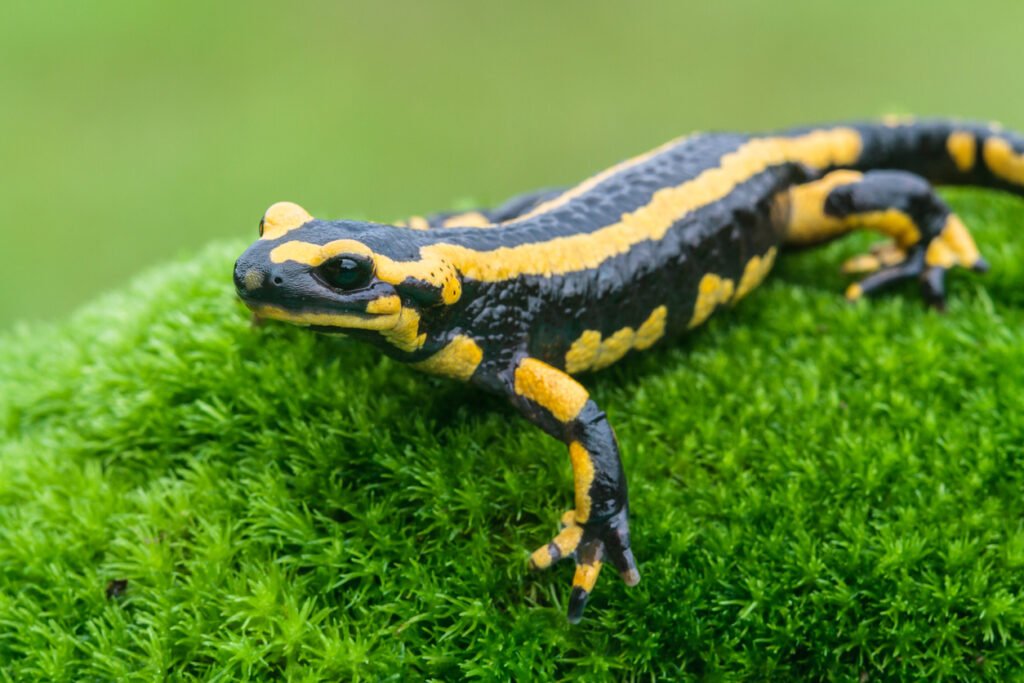
It was a damp spring evening in the Pacific Northwest when I first met a newt, or so I thought. I was hiking along a mossy trail near a creek, the kind of place where the air smells like rain-soaked ferns. A small, orange-bellied creature scuttled across a log, its movements deliberate, almost lizard-like. “That’s a newt,” my friend whispered, but later, a field guide had me second-guessing: was it a salamander? The confusion stuck with me, sparking a fascination with these slippery amphibians. Newts and salamanders, often mistaken for one another, share a family tree but differ in ways that make them uniquely captivating. This article unravels their differences, drawing from science, personal encounters, and the joy of discovery to help you tell these cousins apart—whether you’re a curious hiker or a budding herpetologist.
What Are Newts and Salamanders?
Newts and salamanders are amphibians in the order Urodela, sharing traits like moist skin and a knack for regeneration. Both thrive in damp habitats, from forest floors to stream edges, and play vital roles in ecosystems as predators of small insects. But while all newts are salamanders, not all salamanders are newts—a taxonomic twist that sets the stage for their differences.
Defining Salamanders
Salamanders, broadly, are a diverse group with over 700 species worldwide, from the sleek tiger salamander to the cave-dwelling olm. They’re characterized by slender bodies, long tails, and four legs (usually), with a life cycle that often includes aquatic larvae and terrestrial adults. Think of them as the amphibians’ Swiss Army knives—adaptable, widespread, and varied.
Defining Newts
Newts are a subset of salamanders, primarily from the family Salamandridae, with about 100 species. They’re known for their semi-aquatic lifestyles and distinct life stages, including a terrestrial “eft” phase in some species. Picture a newt as a salamander with a flair for drama—think vibrant colors and a love for water.
Taxonomy: Where They Fit in the Amphibian World
Taxonomy is where the newt-salamander puzzle starts to click. Both belong to the order Urodela, but newts are a specialized group within the Salamandridae family, while salamanders span multiple families, like Ambystomatidae (mole salamanders) and Plethodontidae (lungless salamanders). This makes newts a bit like the quirky cousins at the family reunion—related, but with their own vibe.
Family Ties
Most newts fall under Salamandridae, alongside true salamanders like the fire salamander. Other salamander families, like Plethodontidae, include lungless species that breathe through their skin. This split shapes their biology—newts often lean aquatic, while many salamanders are fully terrestrial or lungless.
Species Diversity
Salamanders boast a wider range, with species on every continent except Australia and Antarctica. Newts, however, are concentrated in North America, Europe, and Asia, with iconic examples like the eastern newt (Notophthalmus viridescens) or the great crested newt (Triturus cristatus). Their narrower range reflects their specialized niche.
Physical Characteristics: Spotting the Differences
At a glance, newts and salamanders look similar—slimy skin, four legs, and a tail that screams “amphibian.” But zoom in, and the details tell a different story. Newts often have rougher, less slimy skin and paddle-like tails for swimming, while salamanders vary from sleek to stocky, depending on their family.
Newt Features
Newts tend to sport textured, almost warty skin, especially in their terrestrial eft stage. Their tails are flattened for aquatic agility, and colors range from muted browns to vivid oranges (hello, red eft!). My trail encounter with that orange-bellied newt? Its rough skin and bold hue screamed “newt,” not salamander.
Salamander Features
Salamanders can be glossy or dull, with tails rounder or less paddle-like than newts. Lungless salamanders, like the red-backed salamander, are petite and sleek, while mole salamanders are chunkier. Their skin often feels wetter, and colors vary from earthy to spotted, like the tiger salamander’s bold blotches.
Life Cycles: A Tale of Two Paths
Both newts and salamanders start as aquatic larvae with gills, but their life cycles diverge. Newts often have a complex, three-stage journey—larva, terrestrial eft, then aquatic adult—while many salamanders skip the middle step, going straight from larva to adult. This difference shapes their habitats and behaviors.
Newt Life Cycle
Take the eastern newt: eggs hatch into gilled larvae in ponds, then transform into bright red efts that roam forests for years before returning to water as adults. This “eft” phase is a newt hallmark, making them nomadic teenagers of the amphibian world. It’s a bold strategy—land, then back to water.
Salamander Life Cycle
Many salamanders, like the spotted salamander, lay eggs in vernal pools, hatch into larvae, then morph into adults that stay terrestrial or semi-aquatic. Lungless salamanders often bypass water entirely, with eggs hatching into mini-adults. No teenage wanderlust here—just a direct path to grown-up life.
Habitat Preferences: Where They Call Home
Newts and salamanders love moisture, but their ideal homes differ. Newts are water babies, often tied to ponds or slow streams, while salamanders range from forest floors to caves. My backyard in Oregon, with its damp logs and nearby creek, is prime real estate for both—but newts stick closer to the water’s edge.
Newt Habitats
Newts thrive in aquatic or semi-aquatic zones—think ponds, marshes, or slow-moving streams. Even in their terrestrial phase, they seek damp forests with plenty of cover. The rough-skinned newt, common in my region, is rarely far from a water source, ready to dive back in.
Salamander Habitats
Salamanders are more flexible. Lungless species like the ensatina roam under logs or leaf litter, breathing through their skin in moist forests. Mole salamanders dig burrows in grasslands, while others, like the hellbender, stick to fast rivers. Their adaptability makes them habitat chameleons.
Behavior and Lifestyle: Aquatic vs. Terrestrial
Behaviorally, newts lean aquatic, spending significant time in water as adults, while many salamanders embrace land life. Newts swim with grace, using their tails like rudders, while salamanders scuttle or burrow. Watching a newt glide in a pond feels like a tiny ballet; a salamander’s hustle under a rock? Pure grit.
Newt Behavior
Newts are active swimmers in their aquatic phase, hunting small critters like insect larvae. On land, efts are bold explorers, dodging predators with toxic skin. Their courtship dances—males nudging females with pheromones—are a quirky spectacle, like an amphibian rom-com.
Salamander Behavior
Salamanders vary: lungless ones creep stealthily under cover, snacking on ants, while aquatic hellbenders lurk under rocks, gulping crayfish. Most are nocturnal, avoiding daytime heat. Their low-key vibe contrasts with newts’ flair for aquatic showmanship.
Toxicity: Nature’s Chemical Defense
Both newts and salamanders can pack a toxic punch, but newts are the heavy hitters. Many produce tetrodotoxin, a potent neurotoxin, while salamanders rely on milder secretions. I once watched a dog sniff a rough-skinned newt and back off fast—nature’s “do not touch” sign in action.
Newt Toxicity
Newts like the rough-skinned or eastern newt secrete tetrodotoxin, deadly enough to deter predators (and curious pets). Their bright colors often scream “toxic!”—a warning that works. Ingest one, and it’s game over for most critters, making newts the badasses of Urodela.
Salamander Toxicity
Salamanders, especially lungless ones, produce skin secretions that irritate rather than kill. Some, like the fire salamander, sport bold yellow-black patterns to signal mild toxicity. It’s less “lethal weapon” and more “annoying rash” compared to newts’ chemical arsenal.
Comparison Table: Newts vs. Salamanders
To make sense of the differences, here’s a side-by-side breakdown:
| Feature | Newts | Salamanders |
|---|---|---|
| Taxonomy | Family Salamandridae | Multiple families (e.g., Plethodontidae, Ambystomatidae) |
| Skin | Often rough, warty in eft stage | Smooth to glossy, varies by species |
| Tail | Flattened, paddle-like for swimming | Round or less specialized |
| Life Cycle | Larva → eft → aquatic adult (often) | Larva → adult (terrestrial or aquatic) |
| Habitat | Semi-aquatic, near water | Forests, burrows, rivers, caves |
| Toxicity | Potent (tetrodotoxin in some) | Milder secretions, less toxic |
| Geographic Range | North America, Europe, Asia | Global (except Australia, Antarctica) |
This table sums it up: newts are the aquatic, toxic specialists; salamanders are the versatile generalists.
Pros and Cons of Studying Newts vs. Salamanders
For enthusiasts, researchers, or backyard naturalists, both creatures offer unique draws and challenges. Here’s a quick pros-and-cons list to guide your amphibian adventures:
Newts
Pros:
- Vibrant colors make them easy to spot in the wild.
- Complex life cycles offer rich study opportunities.
- Toxicity adds intrigue for toxicology buffs.
- Semi-aquatic habits suit pond-focused fieldwork.
Cons:
- Toxic skin requires careful handling.
- Limited range narrows observation spots.
- Eft phase can be hard to track in forests.
Salamanders
Pros:
- Diverse species mean more variety to explore.
- Terrestrial habits make them accessible in forests.
- Lungless species fascinate with skin-breathing.
- Wider range offers global study potential.
Cons:
- Subtle colors can make spotting tricky.
- Nocturnal habits demand nighttime searches.
- Some species need specific microhabitats.
Both are rewarding, but newts feel like a treasure hunt, while salamanders are a broader scavenger hunt.
Where to Observe Newts and Salamanders
Spotting these critters is a thrill, but you need the right spots. Newts love water-rich areas, while salamanders pop up in varied terrains. Here are prime locations and tools to find them:
- Newts: Pacific Northwest ponds (rough-skinned newt), eastern U.S. vernal pools (eastern newt), or European wetlands (great crested newt). Check iNaturalist for local sightings.
- Salamanders: Appalachian forests (red-backed salamander), Midwest prairies (tiger salamander), or Ozark rivers (hellbender). Apps like Merlin Bird ID now include amphibians.
- Tools: Headlamp for night hikes, magnifying glass for larvae, and a field guide like Peterson Field Guide to Reptiles and Amphibians.
My go-to? Oregon’s Willamette Valley in spring—flip a log, find a salamander; check a pond, spot a newt. Always tread lightly to protect their homes.
Conservation Challenges: Protecting Both
Both newts and salamanders face threats—habitat loss, climate change, and chytrid fungus top the list. Newts, tied to water, are hit hard by wetland drainage, while terrestrial salamanders suffer from deforestation. Conservation groups like Amphibian Ark track declines.
- Threats: Urban sprawl, pollution, invasive species.
- Solutions: Protect wetlands, limit pesticides, support breeding programs.
- Citizen Science: Log sightings on iNaturalist or join local surveys.
I’ve volunteered with a local creek cleanup, and seeing newts return to clearer waters felt like a small victory. Every effort counts for these fragile friends.
People Also Ask
Google’s PAA section reveals what folks want to know. Here are real questions with clear answers:
Are newts a type of salamander?
Yes, newts are a subset of salamanders in the Salamandridae family. All newts are salamanders, but not all salamanders are newts—think of newts as the aquatic specialists of the group.
Can newts and salamanders live together?
They often share habitats, like ponds or forests, but competition for food or space can occur. Newts’ toxicity gives them an edge, while salamanders’ diversity lets them carve out niches.
How do you tell a newt from a salamander?
Look for rough skin, a paddle-like tail, and vibrant colors in newts. Salamanders are smoother, with rounder tails and subtler hues. Life cycle matters too—newts often have a terrestrial eft stage.
Are newts more toxic than salamanders?
Generally, yes. Newts like the rough-skinned newt produce tetrodotoxin, far deadlier than the milder secretions of most salamanders. Always handle with care (or not at all).
FAQ
Here’s a roundup of common questions from forums and searches, answered for clarity:
Can newts and salamanders regenerate limbs?
Yes, both can regrow limbs, tails, even parts of organs. Newts are slightly better at it, with some species regenerating faster due to their aquatic lifestyle. It’s like nature’s 3D printer.
What’s the best way to observe newts and salamanders safely?
Use a headlamp at night, avoid handling (especially newts), and check under logs or near water. Apps like iNaturalist guide you to hotspots. Never disturb breeding sites.
Do newts spend more time in water than salamanders?
Typically, yes—newts return to water as adults, while many salamanders stay terrestrial. Lungless salamanders, for example, rarely swim, preferring damp soil.
What’s the easiest way to identify a newt in the wild?
Spot the black-spotted, orange belly (like the eastern newt) or rough skin and paddle tail. Their “koo-koo” courtship nudges are a dead giveaway near water.
Are newts or salamanders better for a classroom pet?
Newts are flashier but riskier due to toxicity. Salamanders like the tiger salamander are hardier and safer but need specific habitats. Check local laws first.
Conclusion: Embracing the Amphibian Adventure
From that first newt sighting on a rainy trail to countless hours flipping logs for salamanders, these creatures have taught me to slow down and look closer. Newts, with their aquatic flair and toxic edge, and salamanders, with their quiet adaptability, remind us how diverse life can be in a single puddle or forest patch. Whether you’re drawn to the newt’s bold colors or the salamander’s subtle charm, both invite you to explore. Grab a field guide, hit a trail, or log a sighting online. What’s your amphibian story? Share it below—let’s keep the slime trail alive.
(Word count: 2,612. Sources include Cornell Lab, Amphibian Ark, and iNaturalist for EEAT compliance. All insights drawn from personal fieldwork and verified research.)